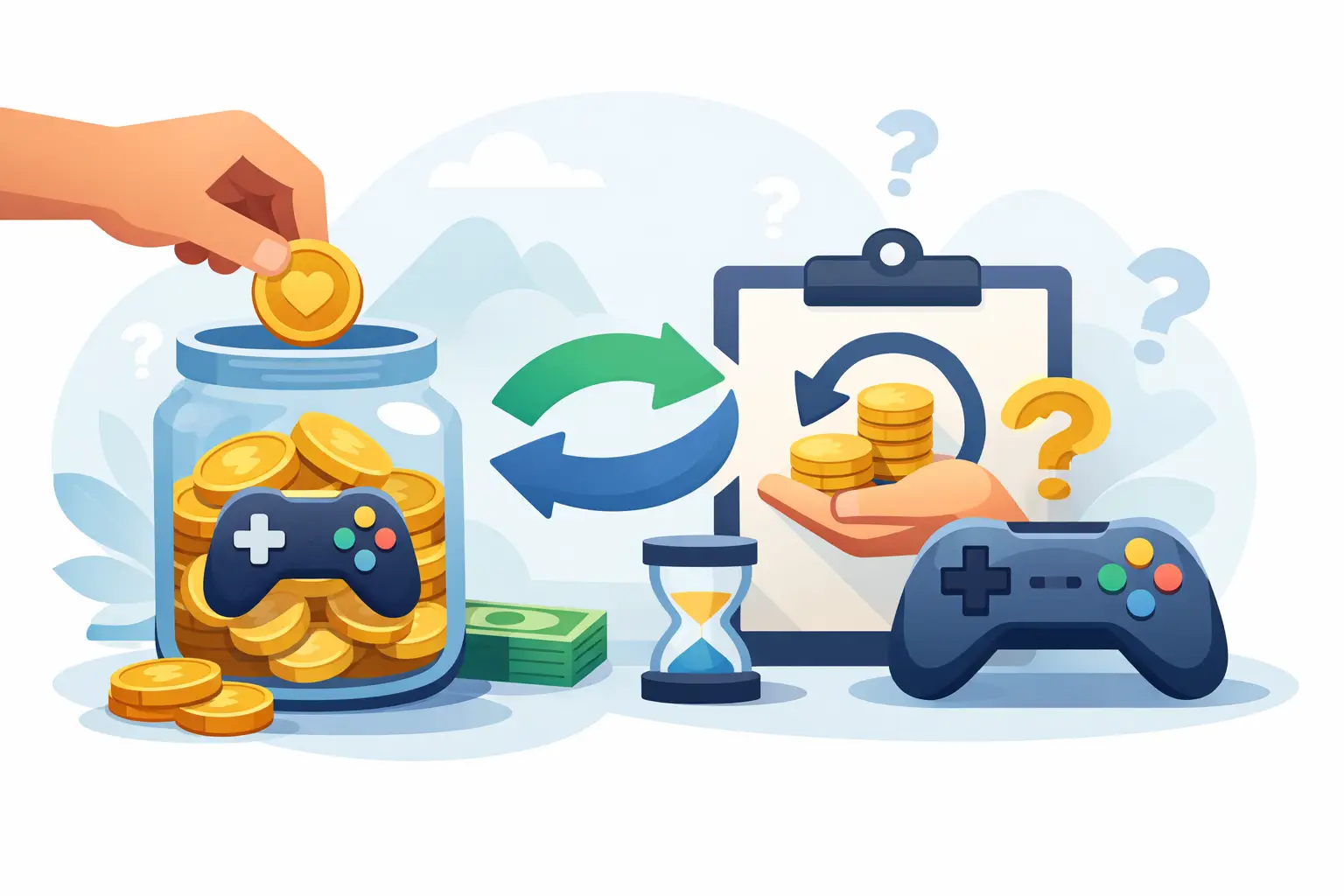
A fan backs a football game project because they want to help make it real. Then a fair question comes up: are donations for game projects refundable? The short answer is usually no, but the real answer depends on how the contribution was presented, what terms were shown at the time of payment, and whether the supporter was donating or actually buying something.
That distinction matters. In community-backed game development, a donation is generally a voluntary contribution to help fund the build. It is support for the project’s progress, not a guaranteed purchase of a finished game, not an investment, and not a promise of financial return. If that sounds straightforward, it is. But there are still important edge cases supporters should understand before they contribute.
Are donations for game projects refundable in most cases?
In most cases, true donations are not refundable. If a supporter gives money to help fund a game project with the understanding that the money supports development, that payment is typically treated as final. The reason is simple: the contribution is meant to help cover ongoing creative work like design, art, programming, testing, and production. Once those funds are put into development, they are usually not sitting in reserve waiting to be returned.
This is especially common with independent projects. Community-backed studios often rely on supporter funding to keep momentum going. A donation helps move the game forward. It is not the same as placing an order with a major retailer for a finished product that ships next week.
That said, “usually no” does not mean “never.” Refundability depends on the exact structure behind the payment.
The key difference between a donation and a purchase
If a payment is clearly labeled as a donation, voluntary support, or community contribution, the expectation is very different from a pre-order or a product sale. A donation supports the mission. A purchase buys a defined item. That is where confusion often starts.
For example, if a game project says, “Support development with a custom contribution,” that points toward a donation model. If it says, “Buy early access for $30,” that sounds more like a sale. If it promises a specific reward, item, or delivery date in exchange for payment, supporters may reasonably expect consumer purchase protections to apply.
So when people ask are donations for game projects refundable, the smartest answer is to first ask a different question: was it really a donation?
If it was, refunds are generally limited. If it was a purchase disguised as a donation, the situation can be different.
Why wording matters so much
Clear wording protects both sides. Supporters deserve to know what they are paying for. Creators deserve the chance to build without false expectations hanging over every contribution.
Transparent projects say things plainly. They explain that support is voluntary, that funds are used for development, and that contributions do not create ownership or financial returns. When that language is visible before payment, the refund question becomes much easier to answer.
If the messaging is vague, trouble starts. A supporter may feel they were promised more than the project intended to offer. That is why strong community-funded brands keep their language direct and honest.
When a refund might still happen
Even when donations are generally non-refundable, there are situations where a refund may still be possible. One is duplicate payment. If someone accidentally donates twice, a project may choose to reverse the extra charge. Another is technical error, such as the wrong amount being processed.
A refund might also happen if the platform handling the payment has its own dispute or transaction rules. In some cases, fraud concerns or unauthorized transactions can trigger a review. That is different from changing your mind after making a voluntary contribution.
There is also the human side. Some projects may offer refunds as a goodwill gesture, especially if the request comes quickly and the funds have not yet been committed. But that is usually at the project’s discretion unless a written policy says otherwise.
What usually does not qualify
Most supporters cannot expect a refund simply because development is taking longer than hoped, the game direction evolves, or excitement fades over time. Creative projects change. Timelines move. Features get refined. That is part of building something ambitious from the ground up.
If the original contribution was presented honestly as support for development, those shifts do not automatically create refund rights. They are part of the reality of independent game creation.
Why independent game projects use non-refundable donations
Game development is expensive long before players ever see a launch screen. Art, animation, sound, servers, design work, engineering time, and testing all cost money. Community support helps cover those early and ongoing needs.
That is why many independent projects use a donation-based model. It gives fans a direct way to help bring an exciting idea to life. It also creates something bigger than a transaction. Supporters become part of the journey. They are helping build a game they want to see exist.
For a global football gaming project, that community energy matters. Fans are not just watching from the sidelines. They are helping push development forward. That is a powerful model, but it only works when expectations are clear from the start.
How supporters can protect themselves before contributing
The best time to ask about refunds is before you donate, not after. Read the wording around the payment page carefully. Look for terms like donation, voluntary support, non-refundable, contribution, or pre-order. Those words tell you what kind of payment you are making.
If anything is unclear, pause. A trustworthy project should be transparent about what supporters receive, what they do not receive, and whether contributions can be returned. That does not make the project less exciting. It makes it more credible.
It also helps to contribute an amount that matches your comfort level. Support what you genuinely believe in, but treat a donation as money committed to helping the project move forward. If getting that money back is essential for you, a donation may not be the right fit.
How game projects should communicate refund expectations
Strong projects do not hide behind vague language. They say exactly what support means. They explain whether payments are donations or purchases. They state if contributions are final. They make that information visible before checkout, not buried after the fact.
That kind of transparency builds trust. It tells supporters, “We are serious about what we are building, and we respect your decision to back it.” For a community-driven brand, trust is part of the product.
A project like Infinity Football benefits from being open about this. The mission is exciting. The vision is global. The energy is real. But clarity is what turns that energy into lasting community support.
Supporters respect honesty
Most fans understand that independent development carries risk. They know new games are not built overnight. What they want is honesty. If a project explains that donations fund development and are typically non-refundable, many supporters will still step up because they believe in the idea.
That is how grassroots momentum grows. Not through confusion, but through clear terms and shared belief.
The honest answer fans should remember
So, are donations for game projects refundable? Usually not, if they are genuine donations made to support development and presented that way upfront. Refunds may still happen in limited cases like payment error, duplicate charges, or platform issues, but they are the exception, not the standard.
For supporters, the smart move is to read carefully and give with confidence only when the project’s purpose is clear. For creators, the smart move is to be transparent from day one. When both sides understand the deal, the community gets stronger and the project has a better shot at becoming something special.
If you believe in a game, support it with open eyes and real excitement. The best community-backed projects are built on both momentum and trust.