A new football game does not start with a stadium-size budget. It starts with belief. That is why one of the biggest questions fans and supporters ask is simple: can donations fund game development?
Yes, they can. Not always fully, not instantly, and not without discipline. But for independent projects with a strong idea, a clear message, and a real community behind them, donations can absolutely help move development forward.
For a community-backed football game, donations are more than a payment method. They are momentum. They show that people want this project to exist, want to help shape it, and want to be part of something exciting from the beginning.
Can donations fund game development in a real way?
They can, as long as everyone understands what donations are actually doing. Donations are voluntary support. They are not an investment. They do not create ownership, and they do not promise financial returns. What they do provide is funding that can be used to build the game step by step.
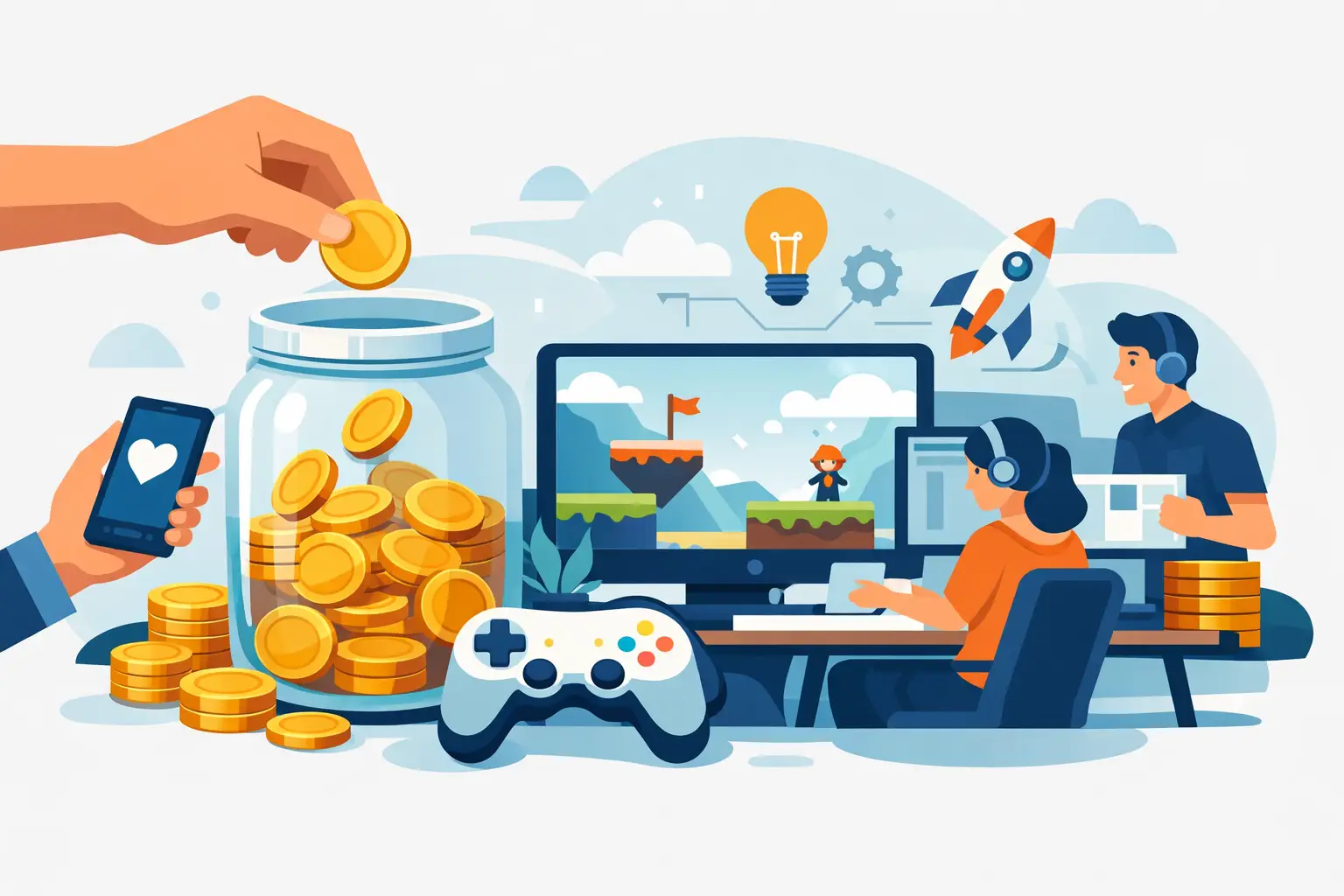
That matters for independent development. Games need art, animation, audio, design, testing, technical systems, and time. Even a focused sports title requires real production work. If a community contributes to that process, those donations can support key parts of development such as gameplay systems, graphics production, interface design, and core infrastructure.
The realistic answer is that donations often fund progress in stages rather than covering everything at once. A major publisher can write one giant check. An independent project usually builds in phases. Community funding helps make those phases possible.
Why donations work especially well for independent games
Big studios usually build around investors, publishers, or established revenue. Independent projects often build around audience belief. That changes the relationship from the start.
When supporters donate to a football game idea, they are saying something powerful: this deserves to be built. That validation matters almost as much as the money itself. It gives the project proof of demand. It creates an early base of people who care. It also gives developers room to keep building without relying entirely on traditional gatekeepers.
This model works especially well when the game taps into a passionate audience. Football is global. Gaming is global. Put those together, and you have a real opportunity to bring fans into the creation process in a way that feels personal and exciting.
A donation-based model also fits audiences who want to participate, not just consume. Many supporters like being early. They like helping launch something original. They like knowing their contribution helps push a project from concept to reality.
What donations can actually pay for
This is where transparency matters. People are more likely to support development when they understand what their donation helps make possible.
In practical terms, donations can help cover gameplay programming, visual asset creation, animation work, sound production, quality testing, and development tools. They can also support the less visible work that still matters, such as project coordination, technical fixes, and iteration.
For a football game, that might mean improving how players move, refining match feel, building better menus, polishing visual presentation, or expanding content piece by piece. Support does not have to fund an entire finished game overnight to be meaningful. If it funds the next real milestone, it is doing its job.
That is the key point. Community-backed development is about progress. Every contribution helps turn ideas into playable systems.
The trade-off: donations are powerful, but not automatic
It is worth being honest here. Donations can fund game development, but they are not magic.
A donation model depends on trust, attention, and consistency. If the project message is vague, people hesitate. If the vision feels weak, people wait. If communication disappears, support slows down. Community-backed funding only works when the project earns confidence over time.
There is also a scale question. Smaller donation streams can help fund early development, prototypes, art passes, and incremental improvements. Larger ambitions may eventually require broader revenue sources, partnerships, or expanded support systems. That does not make donations less valuable. It just means the answer depends on the size of the project and how efficiently the team builds.
For many independent games, donations are not the whole machine. They are the fuel that starts it, sustains it, and proves it deserves to keep going.
What makes people donate to a game project?
People rarely donate because of technical detail alone. They donate because they believe in the mission.
That is why vision matters so much. A football game project needs to feel fresh, exciting, and worth rallying behind. Supporters want to know what makes it different. They want to feel the energy. They want to see that this is not just another vague concept, but a real attempt to build something global and innovative.
Clarity also matters. Supporters respond well when they know that donations are voluntary, that there is no financial return, and that the goal is to directly support development. Straightforward messaging builds credibility. It removes confusion and makes the decision easier.
Then there is community. People are more likely to contribute when they feel they are joining others, not acting alone. Momentum matters. A project with visible supporter energy feels alive. It feels like a movement, not just a fundraiser.
Can donations fund game development long term?
They can, but long-term success usually comes down to how well the project keeps earning support.
That means staying active, showing progress, and keeping the community connected to the mission. Long-term donation support is less about one big moment and more about sustained belief. Supporters need reasons to keep backing the project over time.
For a football gaming brand, that could mean continuing to show how the project is evolving, how support contributes to real development, and why this community-built approach matters. If people feel their backing is helping build something bigger than a transaction, they stay engaged.
The strongest donation-backed projects create an identity people want to belong to. They make supporters feel like early builders of a new experience. That is a powerful advantage for independent entertainment brands.
Why this model fits a football gaming community
Football fans already understand loyalty, identity, and backing a club or cause through ups and downs. That spirit carries naturally into a community-supported game.
A new football title does not just need players at launch. It needs believers before launch. It needs people who want a different kind of sports gaming future and are willing to support it while it is still being built.
That is what makes donation-based development so exciting in this space. It gives fans a direct role. Instead of waiting for large publishers to decide what gets made, the community can help push a new vision forward.
For a project like Infinity Football, that model is especially aligned with the mission. The idea is simple and powerful: supporters are not buying stock, and they are not promised returns. They are helping build an original football entertainment experience because they want to see it exist.
That creates a more human connection between the project and the people behind it. It feels grassroots. It feels global. It feels like building together.
What supporters should keep in mind before donating
The best donation relationships are based on clear expectations. A donation supports development, but it does not guarantee a specific release timeline, feature set, or financial outcome. Game creation takes time. Plans evolve. Priorities shift as development moves forward.
That does not weaken the model. It strengthens it, because honesty creates durable trust. Supporters who understand the journey are more likely to stay engaged through the early stages.
From the project side, the responsibility is to be clear, energetic, and credible. From the supporter side, the mindset is simple: contribute because you believe in the vision and want to help move it forward.
That is the real answer to the question. Can donations fund game development? Yes – when the idea is strong, the mission is clear, and the community is ready to help build something exciting from the ground up.
If you believe football gaming still has room for a fresh, community-powered future, supporting development is one of the most direct ways to help make that future real.