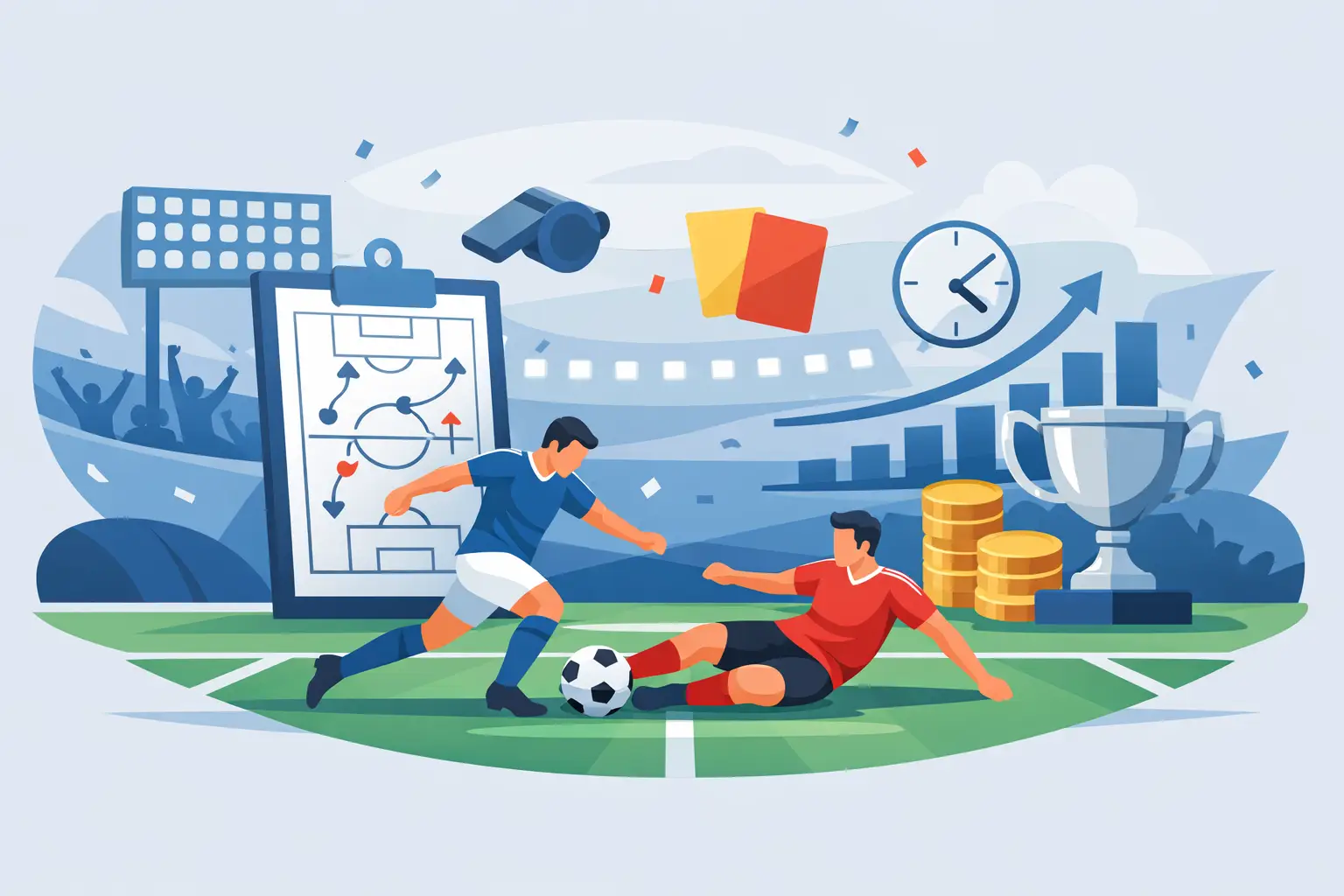
A great football game is not defined by a menu screen, a famous badge, or a highlight reel alone. It is defined by the split-second decisions that make a player lean forward: the pass released just before a tackle, the defender who reads the run, the keeper who holds position under pressure. Football game mechanics are the systems behind those moments, and they decide whether a match feels alive or simply looks like football.
For fans, the goal is simple: every attack should feel exciting, every defensive stop should feel earned, and every win should tell a story. Building that experience takes more than adding features. It takes mechanics that work together, reward smart play, and leave room for the unexpected.
What Football Game Mechanics Really Do
Mechanics are the rules and responses that shape what happens when players move, pass, shoot, tackle, sprint, switch defenders, or make tactical choices. They are the connection between a controller input and the emotion of a match.
A through ball, for example, is not just one button. Its quality can depend on the passer’s angle, pressure from defenders, the runner’s timing, available space, and how much power the player uses. If all of those factors are ignored, every pass can feel automatic. If they are too demanding, casual players can feel shut out. The best balance gives new players a way into the action while giving committed players real room to improve.
That balance is where football becomes more than a digital version of the sport. It becomes a game people want to replay, discuss, and share with friends.
Passing Should Create Possibilities
Passing is the rhythm of football. Short combinations can pull a defense apart. A sharp switch can change the entire shape of an attack. One brave ball through the middle can create a moment fans remember.
Good passing mechanics should make vision matter. Players should be able to see an opening and act on it, but they should also have to respect risk. A rushed pass into a crowded lane should be easier to intercept than a carefully placed ball into space. A forward who starts a run early may beat the back line, while a late run may leave the pass with nowhere to go.
The key is responsiveness. When a player spots the right move, the game should not make them fight the controls to attempt it. At the same time, the game should not promise perfect accuracy in every situation. Football is full of imperfect touches, deflections, and passes that almost work. That tension is part of what makes it thrilling.
Dribbling Needs Skill, Not Just Speed
Dribbling is where personality enters the match. Some players want to slow the game down, shield the ball, and wait for support. Others want to attack a defender one-on-one and create something from nothing. Both approaches should have a place.
The strongest dribbling systems reward timing and body position rather than endless sprinting. A player who changes direction at the right moment should have an advantage over a defender who commits too early. But a dribbler who tries the same move repeatedly should become predictable.
This is also where trade-offs matter. Fast, direct movement can help launch a counterattack, but it may make close control harder. Tighter touches can protect the ball in crowded areas, but they may reduce top speed. Those choices create football decisions instead of one dominant move everyone uses.
Defending Must Feel Active and Fair
No one wants a football game where defending feels like waiting for the other side to make a mistake. Defenders need meaningful tools: smart positioning, pressure, containment, interceptions, tackles, and the ability to organize a team shape.
A successful tackle should feel satisfying because it came from good judgment. Charge in at the wrong angle, and a skillful attacker should be able to turn away. Hold your ground, cut off the passing lane, and time the challenge well, and the ball should be there to win.
Defensive player switching is especially important. When an opponent breaks quickly, players need to reach the right defender without confusion. Poor switching can make a conceded goal feel unfair, even when the opponent made a strong move. Clear control and dependable selection help players take responsibility for what happens next.
Fairness does not mean every challenge has a guaranteed result. Loose balls are part of football. But players should understand why a moment happened. If a tackle fails, the angle, timing, speed, or balance should make sense on screen.
Shooting Is About Pressure and Confidence
The best goals are rarely just about power. They come from reading the keeper, choosing a corner, finding space in the box, and staying calm when a defender is closing fast.
Shooting mechanics should reflect that pressure. An open look from close range should feel very different from a first-time volley while falling away from goal. A player may choose a controlled finish, a driven strike, a chip, or a shot across the goalkeeper. Each option should carry its own opportunity and risk.
Goalkeepers matter here too. They should not be impossible walls, and they should not turn every shot into a goal. Their positioning, reactions, reach, and decision-making need to create believable saves without removing the reward for a well-built attack.
When the final whistle comes, players should remember the chance they created, the decision they made, and the goal they earned.
Movement Makes the Whole Match Feel Real
Football is played by 22 people moving at once. That means off-ball movement is just as important as the player with possession. Attackers need to offer useful runs. Midfielders need to find pockets of space. Defenders need to track danger and protect the center when a teammate steps out.
This does not mean every player should move perfectly all the time. A game can feel more human when shape changes under pressure and when players react to the flow of play. The goal is not robotic precision. It is a match that gives players options.
Tactics should influence those options. A team playing high pressure should try to win the ball early, but risk space behind its defense. A deeper setup can protect the box but may struggle to start attacks. Direct football, patient possession, wide overloads, and quick counters should all feel different because the mechanics support them.
The Best Systems Welcome Different Players
A global football game has to work for more than one kind of fan. Some people want to pick up a controller after work and score a few goals. Others want to study formations, learn advanced controls, and compete for every advantage.
That is why accessibility and depth belong together. Simple actions should be clear and enjoyable from the first match. Advanced options should reward practice without making newcomers feel helpless. Helpful tutorials, sensible control settings, and understandable feedback can make a major difference.
A game also needs to respect the player’s time. Quick matches, clear menus, and reliable online play matter because friction can drain excitement before kickoff. Spectacular mechanics mean little if players cannot easily get into the match they want to play.
Community Input Can Make the Difference
Football fans notice details. They know when a midfield battle feels too passive, when a counterattack is too easy, or when a goalkeeper reacts in a way that does not match the moment. That perspective is valuable during development.
Community-backed creation gives fans a chance to support the kind of football experience they want to see. At Infinity Football, that shared energy is part of the mission: build an exciting, innovative game shaped by people who care about the sport and the moments that make it unforgettable.
Support does not need to come with promises of financial return to matter. Voluntary backing, feedback, conversation, and excitement can help move an independent project forward. Every supporter helps prove that there is room for a fresh football gaming experience built around a global community.
The most memorable football games do not just ask players to press buttons. They ask them to see the pass, take the risk, recover after a mistake, and believe the next attack could change everything. Keep asking for mechanics that make those moments feel earned, because that is how a new football game becomes a game fans truly want to be part of.