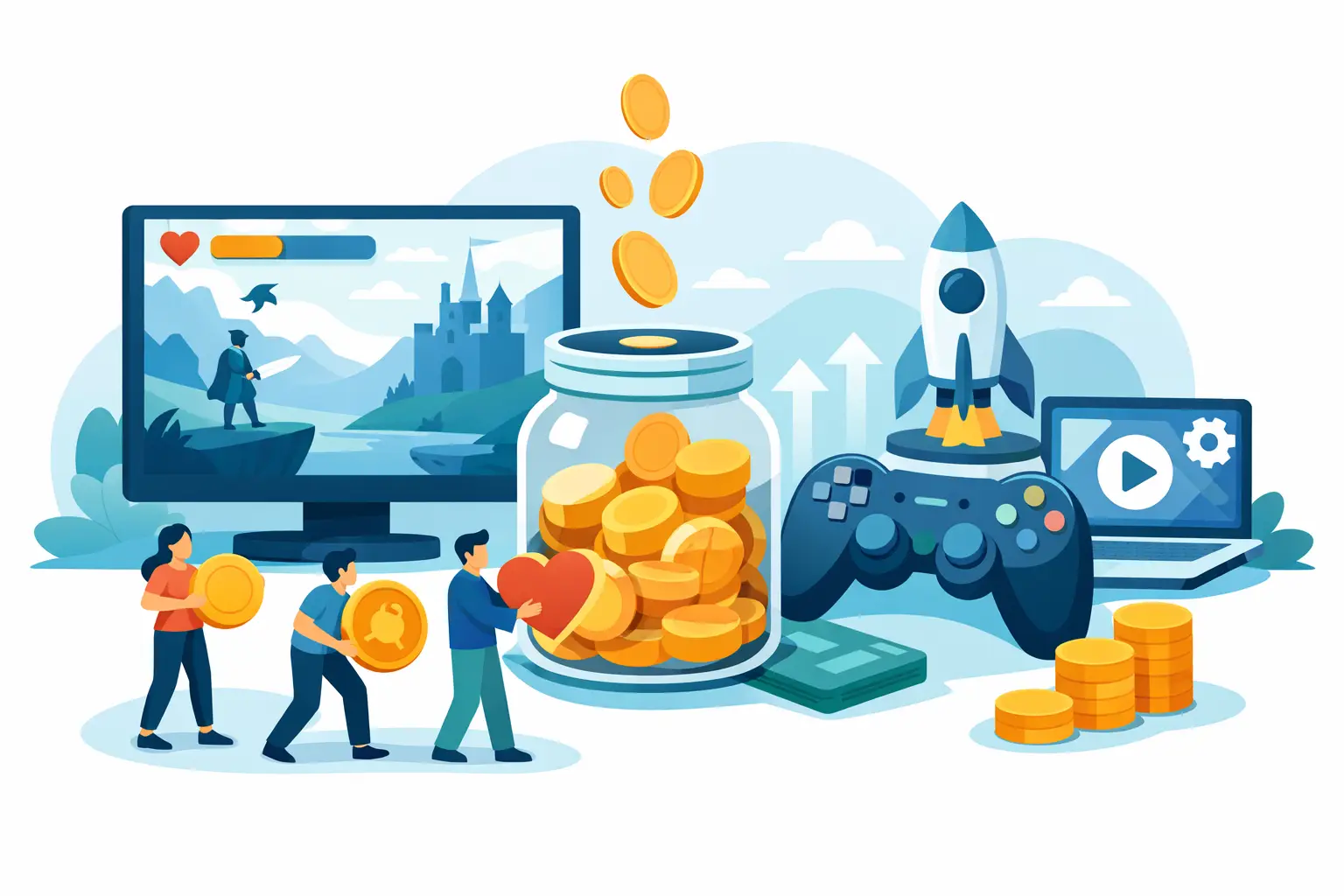
A lot of great game ideas never fail because the idea is weak. They fail because funding shows up late, comes with strings attached, or never shows up at all. That is exactly why more players want to understand how fan funded games work. When a community backs a project early, fans are not just waiting for a publisher to decide what gets made. They are helping push a game into existence.
For football fans and gaming supporters, that model feels especially exciting. Instead of sitting on the sidelines hoping a fresh sports title appears, people can support development directly and become part of the early momentum. That does not make them investors, and it does not guarantee a finished product by a certain date. What it does create is something powerful – a shared mission between creators and the audience that wants the game to happen.
How fan funded games work in simple terms
At the basic level, fan funded games work when supporters voluntarily contribute money to help a game get developed. That funding can go toward art, coding, animation, servers, sound, testing, marketing, or the many day-to-day costs that come with building a real game.
The key difference from traditional publishing is where the money starts. Instead of relying only on a publisher, private investor, or large studio budget, the project raises support from its future community. Fans give because they believe in the concept, the vision, the team, or the chance to help bring something new into the market.
In most cases, this support is donation-based or reward-based. Supporters may receive updates, early access opportunities, community recognition, or other perks depending on the project. But in a model like this, support is not the same as buying stock, and it does not create financial ownership or profit-sharing rights. That distinction matters. Clear expectations build trust.
Why creators choose fan funding
Game development is expensive, and sports games can be especially demanding. Even early prototypes require design work, gameplay systems, user interface planning, visual assets, and technical testing. If an independent team waits for major outside financing before doing anything, progress can stall fast.
Fan funding gives creators a different path. It allows a project to start building with the community instead of waiting for permission from gatekeepers. That can be a huge advantage for original ideas, niche genres, or independent sports titles that may not fit the standard publisher formula.
There is also a creative upside. A fan-backed project often has more room to stay true to its identity. That does not mean creators can ignore budget realities or community expectations. It means they have a better chance to build something distinctive instead of chasing the safest possible version of a game.
What supporters are really paying for
One of the biggest misconceptions around fan funding is that people are paying only for a future download. In reality, supporters are often funding progress itself.
That includes early-stage work that players may never fully see from the outside. A smoother movement system, a better visual style, more polished stadium environments, improved menus, stronger online infrastructure, and more testing all require time and money. Support helps cover that invisible but essential work.
For a football game, it might mean funding gameplay tuning, player animations, match presentation, concept art, or the first playable systems that prove the vision can work. Those steps are not always flashy, but they are what turn an idea into something real.
This is where transparency matters most. The strongest community-backed projects explain what support is for in plain language. Fans respond well when they know they are helping build gameplay, graphics, production, and the overall experience rather than funding a vague promise.
How trust is built in a fan-funded model
Trust is the whole engine. If people do not believe the project is genuine, clear, and serious, support dries up quickly.
That is why communication matters almost as much as the game itself. Supporters want to know what the project aims to become, what stage it is in, and how the team is approaching development. They also want honesty about what support means. If contributions are voluntary and do not provide financial returns, that needs to be stated clearly and consistently.
Strong fan-funded projects avoid overpromising. They do not pretend game development is perfectly predictable. Delays happen. Features change. Early ideas get refined or cut. The smart approach is not to act like every plan is final. It is to keep the community informed while showing steady effort and real intention.
That balance is what makes a project feel credible. Excitement brings people in. Transparency keeps them there.
The trade-offs behind fan funded games
Fan funding is exciting, but it is not magic. It solves some problems and creates others.
The biggest advantage is independence. Teams can build with community backing and avoid some of the pressure that comes from traditional funding structures. They can prove demand early. They can turn supporters into advocates. They can create a sense of belonging around the project before launch.
The challenge is scale. Community support may help a project move forward, but it does not automatically match the budget of a major publisher. That means teams still have to make careful choices. They may need to prioritize core gameplay before extra features. They may need to build in stages. They may need to grow based on momentum rather than giant upfront spending.
There is also emotional pressure. Once fans support a project, they care deeply about progress. That passion is a strength, but it raises expectations. Creators need to respect that energy without letting every comment pull the game in a different direction.
So, do fan funded games work? Yes, when the concept is strong, the communication is honest, and the team treats community support with respect. But it depends on discipline as much as enthusiasm.
How fan funded games work for sports and football titles
Sports gaming has a unique community advantage. Fans already care about competition, identity, loyalty, and shared culture. That makes football especially well suited to community-powered support.
People do not just want another game file on a console or phone. They want a football experience that feels alive, modern, and built for the fans who love the sport. A fan-funded football project can tap into that energy by making support feel personal. Backers are not only reacting to ads. They are helping create a game they want to play.
That is why the model can feel bigger than a transaction. A supporter is backing a vision for what football entertainment could become. That may include gameplay development, better graphics, stronger world-building, and a more global community from day one.
For an independent builder brand like Infinity Football, that community-first approach is the point. The mission is not to sell the idea that support buys ownership. It is to give football fans a direct, exciting way to help build something new.
What supporters should look for before contributing
If you are thinking about backing a game, look for clarity before hype. A good project should explain what it is building, how support helps, and what supporters should realistically expect.
You should also pay attention to tone. Does the team sound open and grounded, or are they making giant promises with no specifics at all? Ambition is great. Empty claims are not. The best projects make room for both vision and realism.
It also helps to understand your own reason for supporting. Some people contribute because they want perks. Others want to encourage innovation. Others simply want to be early supporters of an idea they believe deserves a chance. All of those reasons are valid, as long as expectations are clear from the start.
Community support is more than funding
The money matters, but fan-funded games are not powered by dollars alone. They grow through attention, conversation, and belief. When supporters share a project, talk about it, and help build momentum, they expand what the funding can actually do.
That community energy can be a major advantage for a new game. It creates early validation. It helps attract more supporters. It gives the project social proof before release. And in crowded markets, that kind of grassroots movement can matter just as much as a marketing budget.
This is why fan funding feels so different from passive consumption. It is active participation. People are not waiting for culture to happen around a game later. They are helping create that culture early.
If you have ever wanted a fresh football gaming experience instead of more of the same, this model makes a lot of sense. You are not just cheering from the stands. You are helping build the stadium.