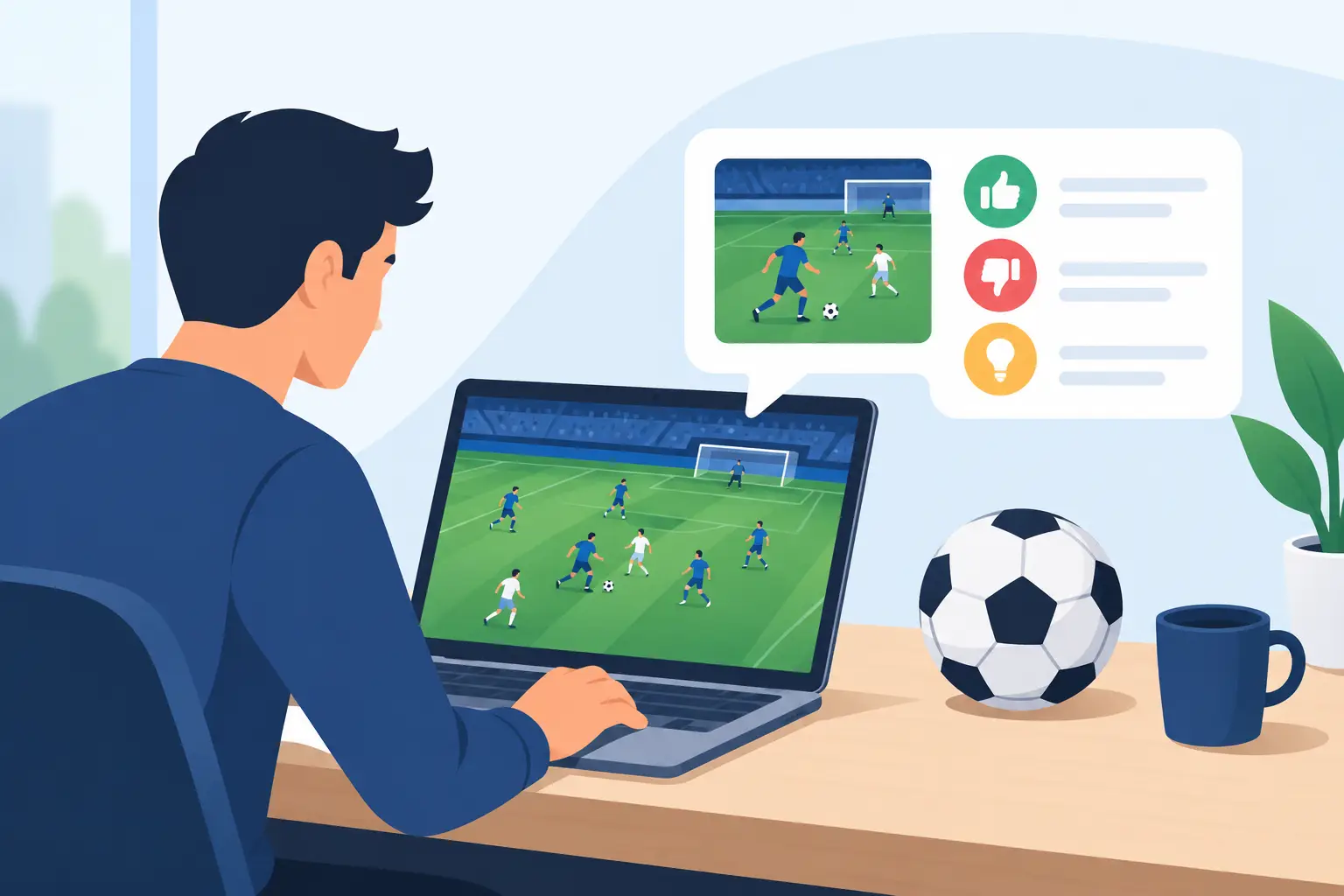
A football game does not start with a full stadium, polished graphics, and finished menus. It starts with a simple question: would this feel fun once a player has the controller in hand? That is the heart of how gameplay ideas become playable. A concept can sound exciting in a pitch, but until it works on the screen, at speed, under pressure, it is still just an idea.
For a project built around football fans and community momentum, that gap between idea and playable experience matters a lot. People are not just supporting artwork or hype. They are helping push real gameplay forward – the part that decides whether a football game feels alive, responsive, and worth coming back to.
How gameplay ideas become playable in real development
The first version of a gameplay idea is usually smaller than people expect. Not because the ambition is small, but because game development has to prove one thing at a time. If the big idea is smarter passing, more authentic player movement, or better one-on-one battles, the team has to isolate that mechanic and test it in the simplest possible form.
That means developers often begin with a rough prototype. It may have placeholder visuals, limited animations, and basic environments. It might not look exciting yet. But if a through ball feels sharp, if defensive pressure creates real tension, or if player momentum changes how you attack, then something valuable is starting to take shape.
This is where many people misunderstand development. They think the best ideas arrive fully formed. In reality, strong gameplay is built through repetition. Try it. Break it. Adjust it. Try it again. That cycle is not a delay from the real work. It is the real work.
A good idea must survive player input
Football games are especially demanding because they rely on constant interaction. Every mechanic connects to another. Passing affects positioning. Positioning affects space. Space affects dribbling, defending, and shot selection. So even a promising feature can fall apart once players begin making unpredictable decisions.
A mechanic that sounds great on paper may feel too slow in a fast attack. A realistic movement system may become frustrating if it reduces control too much. A powerful defensive feature may improve realism but make matches less exciting. There is always a trade-off.
That is why playability comes before polish. If the mechanic is not enjoyable, visual improvements will not save it. If the mechanic feels strong, even an early build can create excitement because players sense the potential immediately.
The stages that turn an idea into a playable feature
A gameplay feature usually moves through several practical stages. These stages are not always neat, and teams often go back and forth, but the progression is familiar.
It begins with the concept. This is the core thought behind the feature – for example, making first-touch control matter more or creating a more dynamic midfield battle. Then comes prototyping, where the team builds a stripped-down version to test the feel. After that comes early tuning, where timing, speed, responsiveness, and risk-reward balance start getting adjusted.
Once the feature works at a basic level, it has to connect with the wider game. This is where integration becomes important. A dribbling system might feel good alone but conflict with defending. A passing system might be accurate but remove unpredictability. What works in isolation still has to work in a full match.
Then comes feedback and iteration. This stage can be humbling, but it is where better games are made. A feature may need small changes, or it may need a major rethink. Some ideas improve quickly. Others reveal hidden problems only after repeated testing.
Why iteration matters so much in football games
Football is a sport of rhythm, timing, and momentum. That makes iteration more than a technical step. It is how the game finds its identity.
A tiny change in player acceleration can alter the entire flow of a match. A small adjustment to ball physics can make passing feel crisp or awkward. More defensive realism can increase authenticity, but if it slows the action too much, some players may disengage. There is no single perfect setting for every audience. It depends on the style of game being built and the experience the project wants to deliver.
That is why developers keep refining. They are not chasing perfection in the abstract. They are chasing a version of football that feels exciting, fair, and distinct.
Community support helps ideas reach the playable stage
One of the biggest realities in independent development is that ideas need resources to become real. A feature does not move from concept to prototype by passion alone. It takes design time, engineering work, testing, visual support, and repeated iteration.
That is where community-backed development becomes powerful. Supporters are not buying a finished product off the shelf. They are helping fund the actual process that turns football concepts into playable systems. That includes gameplay development, visual production, and the ongoing work needed to keep improving the experience.
For an independent project, this creates a more direct connection between the audience and the game being built. It also creates transparency. Support is voluntary. It is about helping move development forward, not about financial return. That clarity matters because it keeps the relationship honest while still making the mission feel exciting and shared.
Why fan involvement changes the energy of development
When a community rallies behind a football game early, the project gains more than funding. It gains momentum. It gains validation that the demand is real. And it gains a global base of people who want to see a fresh football experience exist.
That kind of support can shape priorities. If fans care deeply about responsive movement, authentic match flow, or a certain style of football feel, that passion gives the project direction. It does not mean every suggestion becomes a feature. It means development stays connected to the people who actually want to play the game.
For a builder brand like Infinity Football, that connection is part of the point. The mission is bigger than releasing something eventually. It is about building a football gaming experience with supporters, not just for them.
Not every exciting idea should stay in the game
This is one of the toughest truths in development. Some ideas sound innovative but create weak gameplay. Others feel impressive at first and become repetitive after a few matches. Some are technically possible but too expensive in time for the value they add.
Good development means knowing when to push forward and when to step back. Cutting a feature is not always failure. Sometimes it is discipline. If removing something helps the game feel faster, clearer, or more fun, that can be the smarter move.
The same is true for ambition. Big vision is essential, especially for a new football project trying to bring something fresh to the market. But vision only wins if it becomes playable in stages. The strongest path is often to prove the core fun first, then build outward with confidence.
What players should look for in an early-stage football project
When people hear about a new football game in development, it is easy to focus only on graphics or feature promises. Those things matter, but they are not the best signal of future quality. A better question is whether the project understands the path of how gameplay ideas become playable.
Is the focus on feel, testing, and iteration? Is there a clear commitment to building mechanics that work before overselling the final experience? Is the community invited into a genuine development journey instead of a vague marketing story?
Those signs matter because playable progress is what turns belief into something tangible. Every prototype, adjustment, and improvement moves the project closer to a football experience people can actually enjoy.
That is what makes this stage so exciting. You are not watching a finished product being advertised from a distance. You are watching a game take shape through work, feedback, and support. If you believe football gaming needs fresh energy, this is where that future starts – with an idea, a playable build, and a community willing to help make it real.
The next great football experience will not appear by accident. It will be built step by step, tested moment by moment, and pushed forward by people who want to be part of something new.