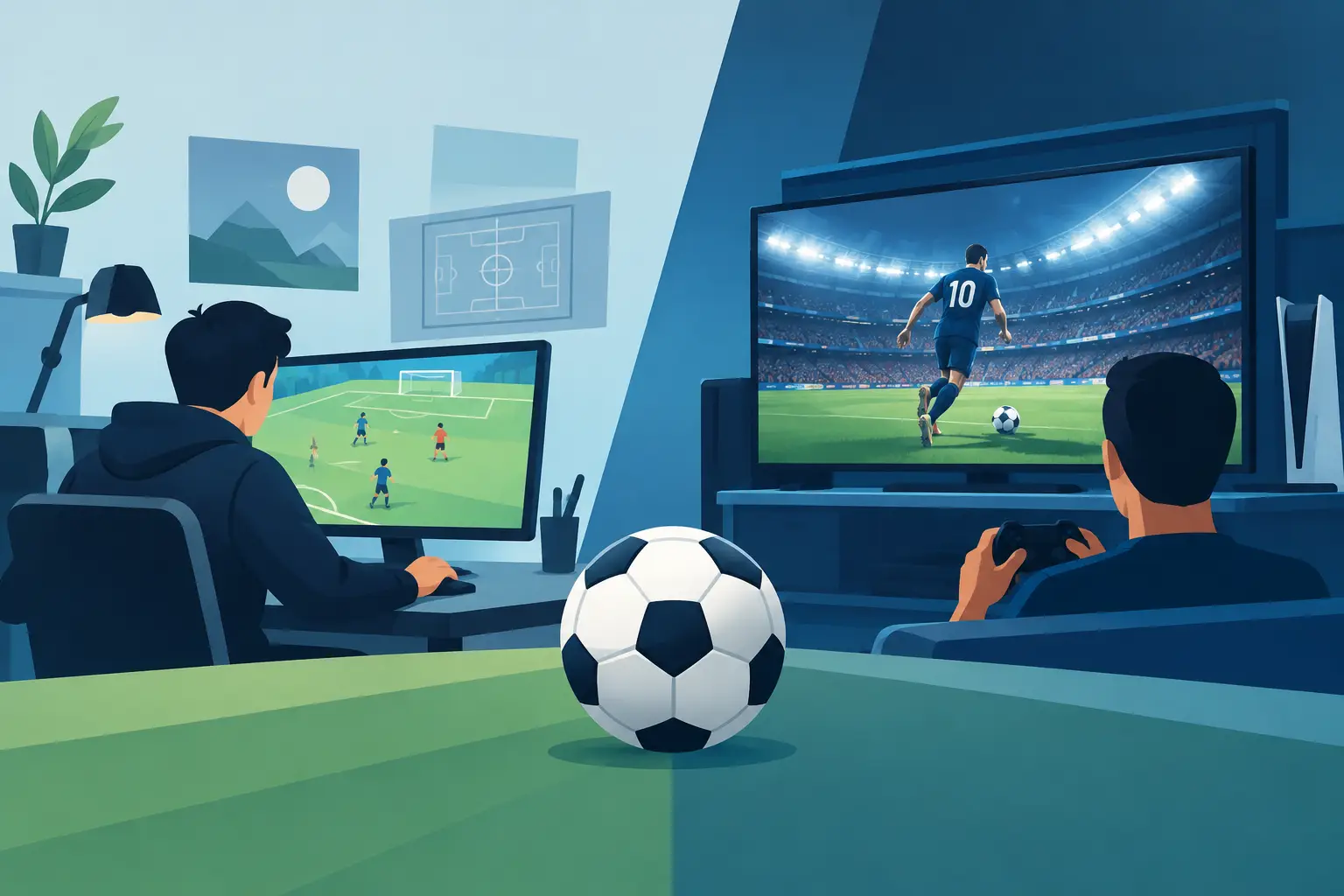
A last-minute goal should feel bigger than a number changing on a scoreboard. The crowd should rise, the net should react, defenders should scramble, and the player’s celebration should carry the energy of a real football moment. That is what great sports game graphics can create: not just a nicer screen, but a stronger connection between the fan, the match, and the game.
For a football game built for a global community, visuals are part of the experience from the first kickoff. They help casual players understand the action, give dedicated fans moments worth replaying, and make every match feel like it belongs on a bigger stage. The goal is not realism for its own sake. The goal is football that feels exciting, readable, expressive, and alive.
Why Sports Game Graphics Matter in Football
Football moves fast. One touch can open space. One mistimed tackle can change the match. If players cannot quickly read where the ball is, who has possession, or what is happening near the goal, even the best game ideas can lose their impact.
Graphics carry that information. A clear player silhouette helps people identify teammates in a crowded midfield. Strong contrast between the ball, grass, kits, and stadium lighting keeps the action easy to follow. Natural movement gives a pass or shot weight. When these details work together, a player spends less time fighting the camera or guessing what happened and more time enjoying the game.
There is an emotional side, too. Football is built on atmosphere. Fans remember the tension before a penalty, the flash of a counterattack, and the release of a goal celebration. Visual design can give those moments personality. A lively stadium, a dramatic replay angle, or a well-timed reaction from the crowd can make a great play feel earned.
That does not mean every football game needs to chase photo-realism. A realistic approach can be powerful, but a stylized look can be just as memorable when it has confidence, consistency, and a clear football identity. The best choice depends on the game’s audience, technical goals, and the feeling the project wants to create.
The Visual Details Fans Notice First
Players may not always name the technical work behind a game, but they notice its results immediately. They see whether the ball moves with purpose, whether a sprint looks explosive, and whether a tackle feels physical rather than awkward.
Player movement tells the story
Animation is one of the biggest differences between a match that looks good in a screenshot and one that feels great in motion. Footballers do not simply run in straight lines. They accelerate, turn sharply, plant a foot, lean into contact, and adjust their body before striking the ball.
Good animation helps every action make sense. A player receiving a hard pass should react differently than one collecting a slow rolling ball. A goalkeeper reaching for a top-corner shot needs urgency and extension. These visual cues make gameplay easier to read while giving every match more intensity.
Movement also needs balance. Too much animation can make controls feel delayed. Too little can make players seem to slide across the pitch. The strongest result is responsive gameplay supported by movement that looks believable at match speed.
The ball must feel like the center of the match
The ball is small, but it is the visual center of football. Its path needs to be easy to track in bright daylight, under floodlights, in rain, and during fast camera changes. Spin, bounce, speed, and contact all matter because they tell players what they can do next.
When the ball reacts convincingly to a crossbar, a goalkeeper’s glove, or a deflection in the box, a match gains drama. But clarity comes first. A perfectly simulated ball that disappears into a busy crowd or blends into the grass creates frustration, not immersion.
Stadiums create the pressure
A football stadium should not feel like empty scenery behind the pitch. It should help carry the emotion of the match. Crowd motion, banners, lighting, tunnel entrances, and scoreboards can all make a fixture feel more important.
Still, there is a practical trade-off. Huge crowds and detailed environments can demand performance that some players do not have. Smart sports game graphics prioritize the parts fans actually feel during play: responsive crowd energy, strong lighting around the action, and a pitch that stays clean and readable. A packed stadium means little if the game stutters during a decisive attack.
Realism, Style, and a Global Football Identity
Football belongs to everyone. A global game needs visuals that can welcome players from different countries, cultures, and gaming backgrounds without losing its own identity.
Realism can help fans recognize familiar football details: grass patterns, fabric movement, stadium shadows, and the physical impact of a challenge. It can make a game feel close to the sport people watch every weekend. Yet realism also raises expectations. If one detail looks convincing, players naturally look harder at every face, movement, and environment around it.
A stylized direction can give an independent football project more room to stand apart. Strong colors, expressive celebrations, distinctive arenas, and bold visual effects can make the game instantly recognizable. The risk is going too far and losing the competitive feeling football fans expect. Style should add energy, not hide the ball or overwhelm the match.
The right answer may sit between the two. A game can use believable player movement and pitch behavior while giving stadiums, presentation, and celebrations a more original visual voice. That approach can feel fresh without asking fans to abandon what makes football feel like football.
Graphics Must Serve the Player
The most impressive visual effect is not always the best one. Motion blur can add speed, but too much can make a fast pass difficult to see. Rain can create atmosphere, but heavy weather effects can make the pitch unreadable. Detailed shadows can look dramatic, but they should never hide a defender near the edge of the box.
Accessibility belongs in the graphics conversation as well. Players have different screens, different hardware, and different visual needs. Adjustable brightness, camera options, readable UI, color-aware kit choices, and performance settings give more people a fair chance to enjoy the match.
This is especially important for a community-focused football game. A global audience will not all play the same way or on the same equipment. Building visual flexibility into the experience is not a small extra. It is part of making the game open to more fans.
Building Football Graphics With Community Energy
Independent game development has a special opportunity: it can build with supporters, not simply market to them at the finish line. Fans often have sharp instincts about what makes football feel right. They notice when a celebration lacks emotion, when a pitch looks too flat, or when a camera angle does not capture a breakaway properly.
Community feedback should not mean adding every requested effect. Great development still needs a clear creative direction and disciplined choices. But listening can reveal what truly matters most. Is the crowd atmosphere exciting enough? Are kits distinct at a glance? Do replays make people want to watch a goal again? These questions can guide effort toward the moments players remember.
Infinity Football is being built around that shared ambition: creating a fresh football entertainment experience with supporters who want to help bring it to life. Voluntary support helps fuel development across gameplay, graphics production, and the wider project. It is participation in the journey, not an investment or a promise of financial return.
That transparency matters. Building a new football game takes time, creative focus, and a community willing to believe that more options in the genre are worth fighting for. Every contribution and every conversation can help strengthen the vision.
What Great Football Visuals Should Deliver
At their best, graphics do not distract from football. They make football more immediate. They help a newcomer understand the action, give a competitive player confidence in what they see, and give fans the rush of a goal that deserves to be celebrated.
The future of football gaming does not belong only to bigger textures or brighter stadium lights. It belongs to experiences that make people feel included in the match and connected to the project behind it. When fans support a game built with that purpose, they are helping create more than visuals. They are helping put a new football world on the pitch.