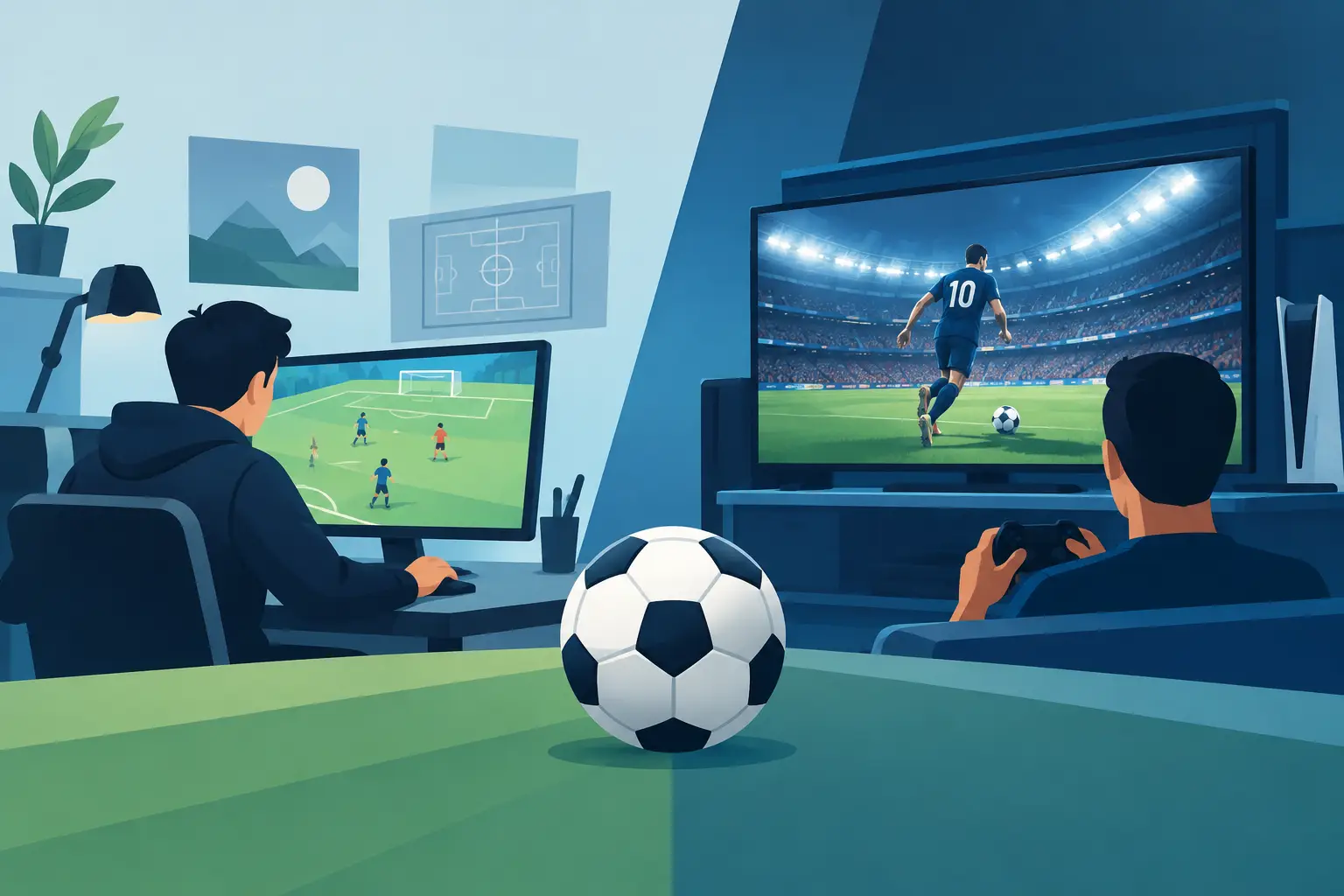
A sports game can get the physics right, the controls sharp, and the competition intense – and still feel forgettable if the visual identity misses. That is why top sports game art styles matter so much. Art style is not decoration after the gameplay is built. It is part of how players read movement, feel impact, and decide whether a game has real personality.
For football fans especially, the visual direction sets expectations fast. Does the game promise realism, energy, accessibility, or pure spectacle? The best sports titles know that art style is part of the pitch. It tells players what kind of experience they are stepping into before the first whistle.
Why top sports game art styles matter so much
In sports games, visuals do more than look good in screenshots. They shape clarity. A strong style helps players track the ball, read player spacing, and react to motion without friction. When the style is off, even good mechanics can feel heavier than they are.
It also affects emotion. A realistic stadium can make a late goal feel dramatic. A bright arcade look can make the same moment feel explosive and playful. Neither approach is automatically better. It depends on the audience, the platform, and the kind of community the game wants to build.
That matters for new projects trying to earn attention. Big publishers can rely on licenses and brand recognition. Independent sports games usually need a visual point of view. If the art style feels focused and confident, players are more likely to believe the project has a future worth supporting.
1. Hyper-realism
This is the style most people associate with premium sports gaming. High-detail player models, lifelike lighting, television-style presentation, realistic grass, sweat, shadows, and stadium atmosphere all work together to mirror a live broadcast.
When it works, hyper-realism creates immediate credibility. Fans recognize the ambition right away. It can make a football game feel serious, competitive, and premium. It also supports immersion, especially for players who want a close connection to real-world sport.
But there is a trade-off. Hyper-realism is expensive and demanding. It raises expectations on animation, crowd behavior, commentary, and physics. If one piece falls short, the whole illusion can crack. For independent teams, chasing this style too early can stretch resources in the wrong direction.
2. Stylized realism
Stylized realism sits in a smart middle ground. The proportions, stadiums, and motion still feel grounded in real sport, but colors are cleaner, shapes are more readable, and visual detail is controlled rather than pushed to the max.
This style is one of the strongest options in modern sports game development because it balances identity with accessibility. It can look polished without demanding absolute simulation in every frame. Players still get the feeling of football, but the game can load faster, read better, and age more gracefully.
For a new football project, this approach often gives the most room to build something exciting and distinctive. It says the game respects the sport, but it is not trapped by trying to imitate a TV camera at all costs.
3. Arcade bold
Arcade art styles lean into speed, exaggeration, and instant energy. Colors are stronger, effects are bigger, animations can be snappier, and the whole presentation often feels louder in the best way. This is less about realism and more about fun that lands fast.
In football, arcade bold can be a powerful direction if the gameplay is built around quick matches, dramatic plays, and broad appeal. It makes a game easier for casual players to approach. It also helps with shareability because the visuals pop on social clips, thumbnails, and small screens.
The challenge is tone. Go too far and the sport can lose weight. Fans who want tension, tactics, and authentic atmosphere may feel disconnected. The sweet spot is keeping the energy high while still respecting the flow of the game.
4. Cartoon-inspired character style
This style pushes personality even further. Player designs may use bigger heads, more expressive faces, simplified bodies, and playful animation choices. It is especially effective when a sports game wants to feel social, family-friendly, or easy to pick up.
There is real value in that. Not every football game has to chase elite simulation. A cartoon-inspired style can welcome younger players, mobile players, and fans who care more about entertainment than authenticity. It gives developers room to create memorable characters and build a global, inclusive tone.
The trade-off is obvious. Some players will instantly see it as less serious. That is not always a problem. It only becomes one if the game’s message and mechanics are trying to promise something more competitive than the art can support.
5. Retro pixel and low-poly revival
Retro visual styles have stayed relevant because they offer charm, clarity, and a strong sense of identity. Pixel art and low-poly design can turn a sports game into something instantly recognizable in a crowded market.
This approach works especially well for indie projects because it focuses attention on gameplay feel and visual consistency rather than expensive detail. A low-poly football field with sharp color contrast and clean animation can be more readable than a cluttered realistic one. A pixel-style presentation can also create nostalgia that connects across generations.
Still, retro is not a shortcut. If it looks accidental or underdeveloped, players will read it as limitation instead of style. The best retro sports games are disciplined. Every color, animation, and UI choice supports the same vision.
6. Broadcast-first presentation style
Some sports titles are defined less by character rendering and more by how strongly they mimic a live event. This style focuses on camera angles, overlays, scorebugs, replay framing, stadium intros, and visual pacing that feels close to sports television.
For football fans, this can be incredibly effective. Even if the player models are not cutting-edge, a strong broadcast-first presentation can make the match feel legitimate. It creates emotional context. The game feels like an event, not just a system.
The risk is that presentation alone cannot carry weak gameplay. If the visual package promises the thrill of matchday but the movement on the field feels flat, players notice fast. Still, when paired with solid mechanics, this is one of the most powerful sports game art directions available.
7. Hybrid cinematic style
The hybrid cinematic approach blends gameplay readability with dramatic visual moments. During active play, the game stays clean and responsive. But on goals, tackles, close-ups, and crowd reactions, the art direction shifts toward high-energy drama with stronger lighting, depth, and effects.
This style fits the modern audience well because it supports both play and spectacle. Gamers want control, but they also want moments worth sharing. A game that can stay readable in motion and still deliver exciting visual payoff has a better chance of building community momentum.
For football, this style can feel especially fresh. The sport already has natural peaks – goals, saves, free kicks, late-match pressure. A cinematic layer can amplify those moments without overwhelming the actual match.
How to choose the right art style for a football game
The smartest choice is not the flashiest one. It is the one that fits the game’s promise. If the goal is pure simulation, a more realistic direction makes sense. If the goal is broad participation and fast fun, stylized or arcade-driven art may be stronger.
The audience matters just as much as the ambition. Casual players usually respond to readability, color, and personality. Mid-core players often want a mix of authenticity and responsiveness. Hardcore simulation fans can forgive slower onboarding if the game looks and feels close to the real sport.
Budget matters too, and this is where honest decision-making wins. An art style should help a project scale, not trap it. A focused visual identity with strong execution will beat a half-finished attempt at realism almost every time.
What fans remember most
Players do not always remember polygon counts or shader quality. They remember whether the game felt alive. They remember the tension of a stadium, the burst of color after a goal, the way the pitch looked under the lights, and whether the whole experience had a clear point of view.
That is what separates memorable sports games from generic ones. The top sports game art styles are not just technically impressive. They are emotionally precise. They tell fans what kind of football world they are entering and make that world feel worth returning to.
For a community-backed future in football gaming, that clarity matters even more. People support bold ideas when they can see them, feel them, and believe in where they are going. The right art style does not just make a game look better – it helps bring the whole vision to life.