A great football game visual identity is not decoration added after the gameplay is built. It is the feeling that reaches fans before the first pass, stays with them after the final whistle, and tells them this game was made for their football world. From a glowing kickoff screen to the colors that frame a late winner, visual identity gives a new game its own voice.
For an independent football project, that voice matters even more. Established titles arrive with years of recognition, massive campaigns, and familiar presentation. A community-powered game has a different opportunity: create an identity that feels fresh, global, and shaped by the people who want a new kind of football entertainment.
Why Football Game Visual Identity Comes First
Football is instantly emotional. Fans recognize a club color from across a street, a stadium silhouette in a second, and the tension of a match before a ball is kicked. A game needs to meet that emotional standard. If its visuals feel generic, players may assume the experience is generic too, even when the underlying ideas are exciting.
Visual identity creates recognition. It helps someone spot a screenshot in a crowded social feed, remember a game trailer, or feel connected when they return to play another match. The logo, type, colors, camera language, motion, menus, match graphics, and promotional artwork all work together. They should feel like parts of one football universe, not separate pieces made at different times.
That does not mean every screen needs to be loud. Football has room for intensity and calm. A pre-match menu can build anticipation with bold color and movement, while a tactical screen may need cleaner space so players can make quick decisions. The goal is not to put the brand everywhere. The goal is to make every visual choice feel intentional.
Build for the Energy of the Match
A strong identity starts with a clear emotional promise. Is the game built around street-level creativity, stadium spectacle, fast competition, tactical drama, or a mix of them? The answer changes the visual direction.
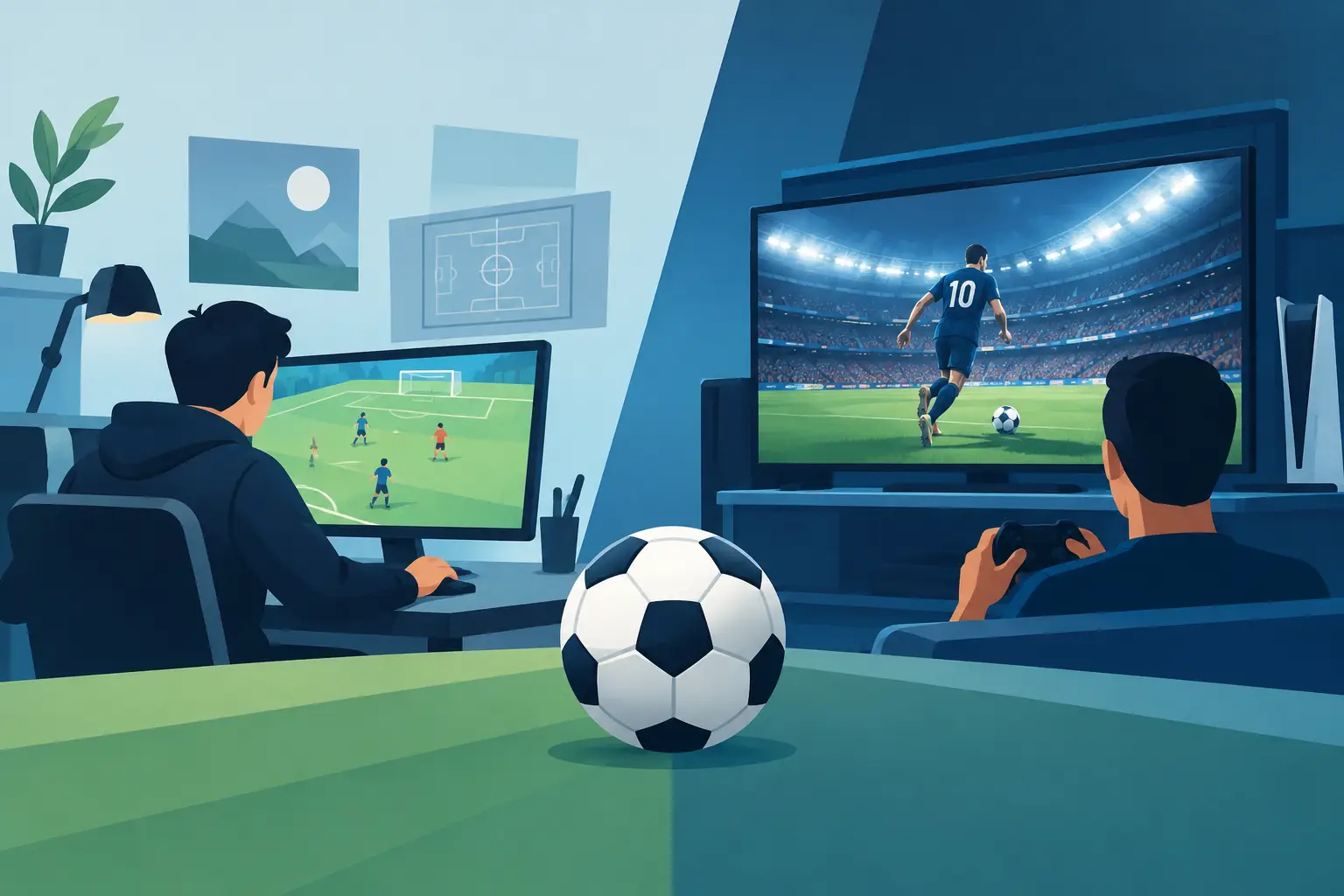
A high-speed, entertainment-first football game may use sharper typography, vivid contrast, energetic transitions, and dramatic light. A more simulation-focused experience may earn trust through restrained interface design, broadcast-inspired graphics, and detailed environments. Neither direction is automatically better. What matters is that the look matches the promise players receive.
For a global football audience, avoid reducing the sport to one market’s idea of it. Football culture is full of different rhythms: packed city pitches, neighborhood cages, major stadium nights, local tournaments, elite technical skill, and spontaneous celebrations. The visual system can respect that range without becoming a collage of stereotypes.
Color is one of the fastest ways to communicate that energy. A focused palette makes a game easier to recognize and gives designers a reliable system for menus, social posts, scoreboards, and events. One dominant color can carry confidence. A bright accent can signal action, rewards, or live moments. Neutral tones can give player images and match footage room to breathe.
The trade-off is clear. Too many colors can make a game feel scattered. Too little contrast can make it disappear. The right palette should look powerful in a cinematic trailer but remain readable on a small mobile screen or a television viewed from across the room.
Make Type and Motion Do Real Work
Typography is often underestimated in sports games. Yet it sets the pace before the gameplay does. Strong, readable type can feel direct and competitive. More expressive type can bring personality to campaign art and special events. The key is consistency: players should not need to re-learn the visual language every time they move from a match screen to a community update.
Motion should have purpose as well. A score reveal, card animation, player introduction, or menu transition can create momentum. But motion that delays decisions becomes frustrating fast. Football games are built around flow. Players want to get into the match, understand what happened, and celebrate what they earned. Visual movement should heighten those moments, not stand in their way.
Let the Interface Respect the Player
The most exciting art direction can lose impact if the interface is confusing. Menus are part of the football game visual identity because they are where players spend real time choosing modes, adjusting teams, checking progress, and returning to play.
Good interface design makes the next action obvious. It uses hierarchy so the most important choice stands out, keeps labels simple, and gives key information enough contrast to be seen immediately. This is especially important for casual players who may not know every football gaming convention. They should feel welcomed, not tested before the match begins.
Accessibility is not separate from identity. Captions, color-aware design, scalable text, readable icons, and clear feedback make more people part of the game. A global community cannot be built around visual choices that exclude players. Inclusive design also improves the experience for everyone during fast, high-pressure moments.
There is a balance to protect here. Clean menus can feel premium, but they can also become sterile if they remove all personality. Expressive menus can create excitement, but they can become tiring if every button competes for attention. The best approach gives the brand a visible pulse while keeping the player’s path clear.
Create a World Fans Want to Join
Football identity is bigger than a logo on a loading screen. It is the world around the match. Stadium lighting, crowd behavior, player entrances, matchday graphics, team customization, and celebration moments all answer a simple question: does this feel like a place I want to be?
Fans do not only want to watch a game look good. They want to see themselves in it. Customization can help make that possible, whether through kits, badges, player styles, or community challenges. The options do not need to be endless on day one. A smaller, focused system that fits the game’s identity is more valuable than a huge set of disconnected choices.
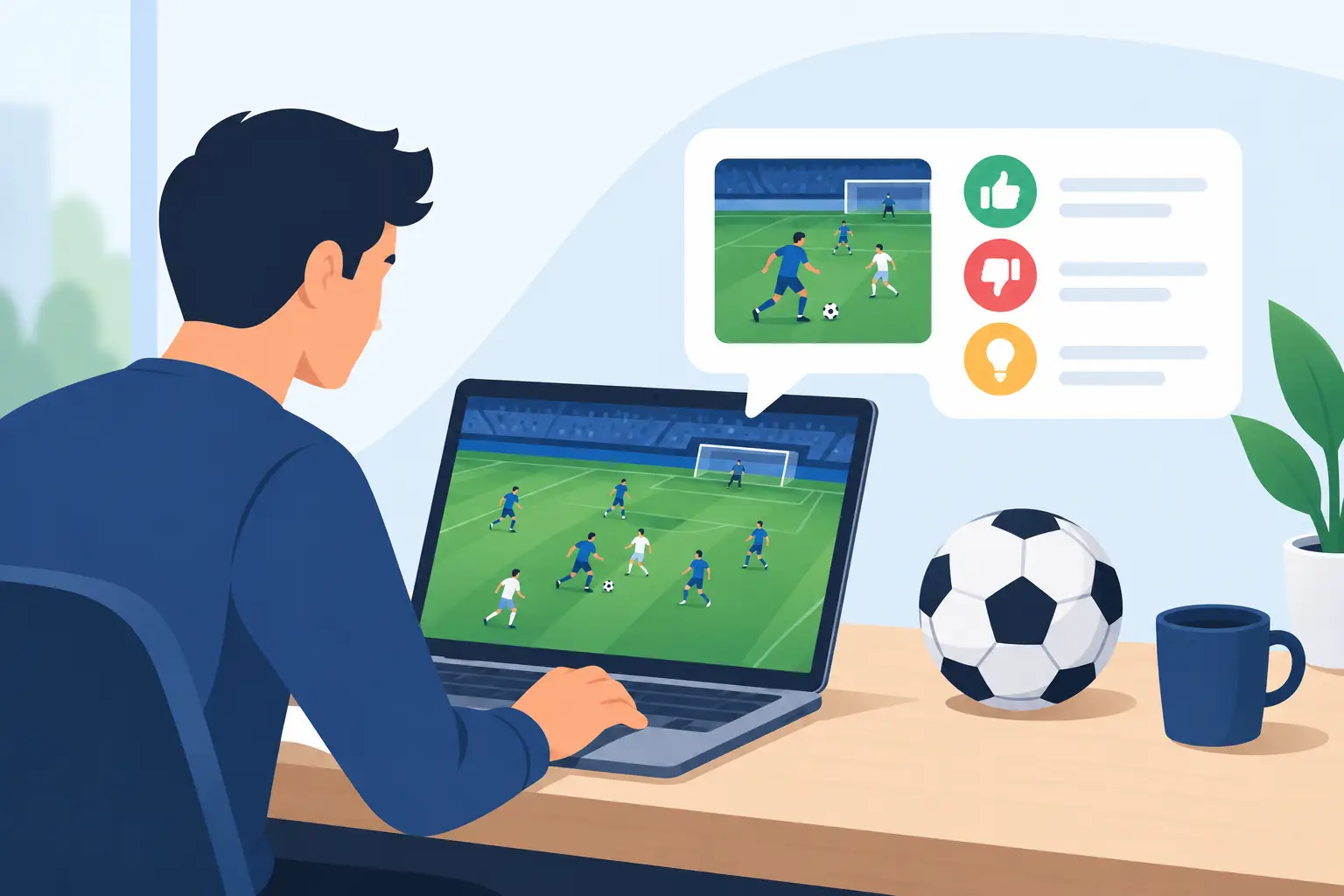
This is where community feedback becomes a real creative advantage. Supporters can react to early color directions, match overlays, logo ideas, and interface concepts. Their input should not turn the project into design-by-committee. A clear creative direction still needs leadership. But fans can reveal what feels authentic, what creates excitement, and what is not landing yet.
At Infinity Football, that shared participation is part of the mission. Voluntary support helps bring gameplay, graphics, and an original football entertainment experience closer to reality. It is not an investment and does not provide financial returns. It is a chance for fans who believe in a fresh game to help build the kind of football world they want to play in.
Keep the Identity Consistent Beyond the Game
A visual identity only becomes powerful when it travels. The same spirit seen in the game should appear in community posts, development updates, trailers, supporter messages, and event announcements. That consistency builds trust. Fans begin to recognize the project before they read the name.
Still, consistency is not repetition. A launch image, a gameplay clip, and a progress update serve different jobs. The system should be flexible enough to adapt while holding onto its core colors, type, imagery, and attitude. Think of it as a team playing different formations with the same badge on the shirt.
Early development is the best time to establish these rules. Waiting until every feature is finished can lead to expensive rework and a fragmented public presence. Starting with a simple visual toolkit gives the project a foundation that can grow as the game grows.
The Look Is a Promise
A football game’s visual identity tells fans what kind of experience they are being invited into. It can signal speed, imagination, competitive fire, belonging, and ambition before a controller is picked up. More importantly, it can make supporters feel that this project has a place for them.
The best next step is not to chase the loudest trend or copy the biggest name in the category. Build a visual world that earns attention, makes play easy to understand, and gives a global football community something exciting to rally around. When fans can recognize that world at a glance, they are no longer just watching a project develop. They are helping give it a face.