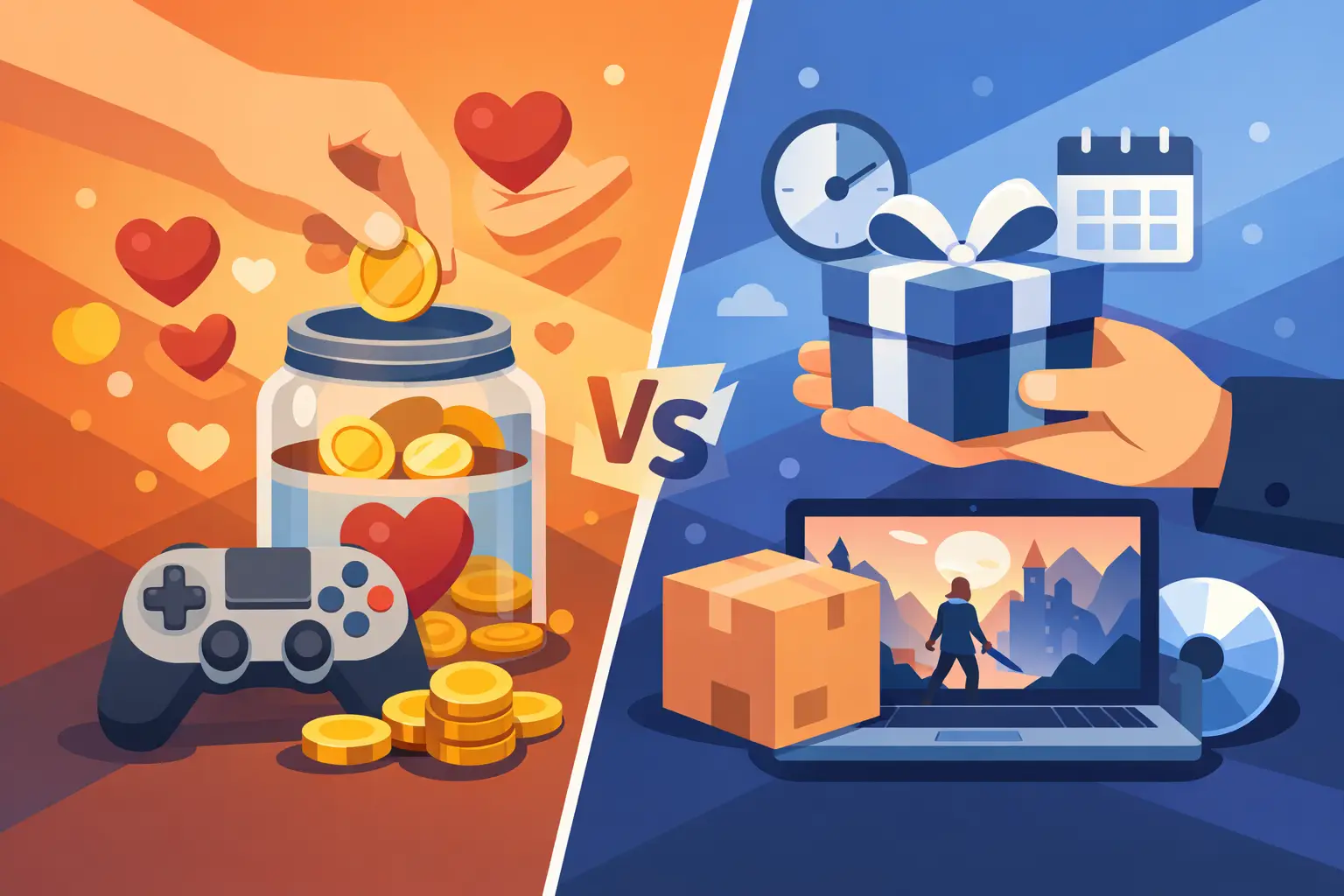
A support button and a pre-order button can sit side by side online, but they represent two very different choices. In the conversation around game donations versus pre orders, the difference comes down to purpose: one helps make a project possible, while the other reserves a product that is expected to be delivered.
For football fans who want a fresh, independent gaming experience, understanding that difference matters. It sets the right expectations, protects trust, and makes every contribution feel honest and meaningful.
Game Donations Versus Pre Orders: The Core Difference
A pre-order is a purchase made before a game is released. A player pays money with the expectation of receiving the game, and sometimes extra digital content, when the publisher launches it. The transaction is tied to a future product. Release timing, platform availability, editions, and refund rules may vary, but the central idea is clear: the customer is buying access to a game.
A donation is voluntary support for a project, team, creator, or mission. It helps fund the work happening behind the scenes, such as gameplay development, art, sound, testing, and production. A donation is not an investment, does not create ownership, and does not provide a financial return.
That distinction should never be buried in small print. If a project asks for donations, supporters deserve clear language about what their contribution means and what it does not mean. There should be no assumption that a donation guarantees a copy of the game, early access, a specific feature, or a release date unless those items are clearly stated as part of the support terms.
Why Pre-Orders Work for Finished Game Plans
Pre-orders make the most sense when a game has moved beyond the early idea stage and has a defined commercial release plan. The developer or publisher can identify where the game will be available, when it is expected to launch, what version buyers will receive, and how much it will cost.
For fans, that structure is straightforward. You know you are reserving a future entertainment product. For studios, pre-orders can signal demand and help plan marketing, distribution, server capacity, and launch activity.
Still, a pre-order is not a magic guarantee that every detail will remain unchanged. Games can be delayed, platform plans can shift, and features may evolve during final development. Smart players check the stated release terms, avoid treating promotional footage as a final promise, and only pre-order when they are comfortable with the information available.
Pre-orders are best for a game that is close enough to release for the buyer and developer to share a clear agreement: payment now, product later.
Why Donations Matter Earlier in Development
Independent game development often starts with ambition long before there is a finished product to sell. A football game needs more than a big idea. It needs creative direction, gameplay systems, visual identity, technical work, testing, and a community that believes a different kind of experience is worth building.
That is where voluntary support can have real impact. Donations let fans help fuel development at an earlier stage, when traditional publishers may not yet be involved and when the project is still earning its place in a crowded sports gaming market.
The value is participation. A supporter is helping push a shared vision forward because they want to see it exist. They may enjoy following progress, joining the conversation, and becoming part of the early community around a new football entertainment project. That is exciting, but it is different from purchasing a completed game.
For a grassroots project like Infinity Football, community support is about rallying people around the future of football gaming. Every voluntary contribution can help build momentum behind the creative work. It should always be presented honestly: support is support, not a financial opportunity and not a promise of future profit.
Different Expectations Create Different Relationships
The biggest challenge in game donations versus pre orders is not the payment method. It is expectation management.
A pre-order customer reasonably asks, When will my game arrive? A donor is more likely to ask, What is this project working toward, and how can my support help? Both questions are valid, but they require different answers.
Projects accepting donations should communicate in plain language. Share the mission. Explain that development takes time. Be careful with dates and feature promises. If plans change, say so directly. Fans can handle uncertainty far better than they can handle confusion.
Supporters also have a role to play. Before contributing, they should read the project description, understand whether the payment is voluntary, and decide what amount feels comfortable. A donation should come from enthusiasm for the mission, not from pressure or the expectation of a payout.
This clarity creates a healthier community. It gives developers room to build and gives fans confidence that they are being treated with respect.
A donation can still feel personal
Not receiving a product at checkout does not make support less valuable. In fact, many fans enjoy backing an independent project because it feels more direct than buying something off a shelf. They are not simply arriving at launch day. They are showing up while the idea is gaining strength.
The key is honesty. Community participation is powerful when supporters know exactly what they are joining.
How Fans Can Choose the Right Option
The right choice depends on what you want from the moment.
If your main goal is to secure a game for yourself at release, a pre-order may be the better fit once a project offers one with clear terms. You are making a consumer purchase, so look for the platform, price, expected delivery, and applicable policies.
If your main goal is to help an independent football game move forward because you believe the genre needs new energy, a donation may fit your motivation. You are choosing to back the development journey, even though the project may still be evolving.
A few questions can make the decision easier:
- Is this payment described as a purchase or voluntary support?
- Does the project clearly explain what the money helps fund?
- Is there any promise of a game copy, access, rewards, ownership, or returns?
- Am I comfortable contributing even if the development plan changes?
These are not skeptical questions. They are the questions of an informed supporter. Excitement and clarity belong on the same team.
Building Football Gaming With Trust
Football is global, emotional, and built around shared belief. Fans wear colors, debate tactics, celebrate unforgettable moments, and want games that capture more of that energy. A new football game cannot earn that passion through big claims alone. It earns it through consistent work and a community that understands the journey.
Donation-based support gives independent projects a way to invite that community in early. It can help creators focus on the foundations that matter, from responsive gameplay to a stronger visual world and a more entertaining experience for fans across the globe. But it only works when the project stays transparent about what supporters are contributing to.
Pre-orders will have their moment when there is a defined product ready to be reserved. Donations have their moment when a community wants to help turn potential into progress. Neither is automatically better. They serve different stages, different goals, and different kinds of fan participation.
If you want to help shape the next chapter of football gaming, support with clear eyes, real enthusiasm, and an amount that feels right for you. Great games begin with ideas, but they move forward because a community decides they are worth building.